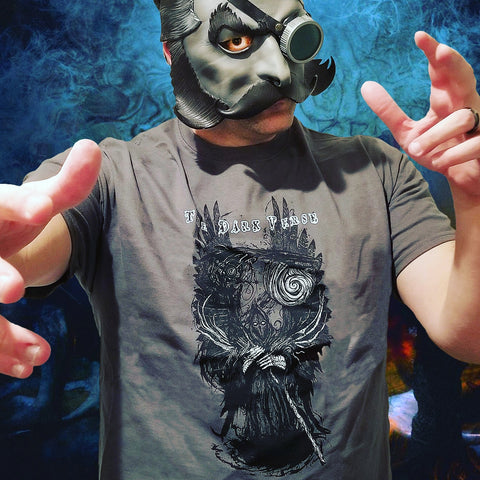
Finding the Way

March 8th, 2010 by Sharkchild

We have all gotten lost, whether literally on a physical journey or in life, in confusion and chaos. It is when the unrecognizable faces us that we feel out of place—a strange neighborhood, an unfamiliar situation, a party where you know no one, heartbreak that is inconceivable. Where or to what do you turn to when facing these scenarios? What is the result? Or does the overwhelming catastrophe of it all consume you until someone bails you out? Or do you run away?

This all relates to the mechanism of coping—how well we deal with challenges, responsibilities, and situations of stress. Why do some people cope better than others? Why does one person lose his or her leg and can still live a full and happy life while another person that loses his or her leg falls into a depressing, stagnant life. Is the way we cope learned? Gained through experience? Genetic?

This topic has come up in my mind because I am facing my own challenges at the present time. The only answer I have to these questions is spiritual, but even within this realm of thought there is a hierarchy of the ability of coping. Therefore, I really don’t have the answers to the above questions.

The Wikipedia article on coping states that there are three main coping strategies: appraisal-focused, problem-focused, and emotion-focused coping. Appraisal-focused coping occurs when a person modifies the way he or she thinks about a problem. Problem-focused coping occurs when the cause of the problem is dealt with. Emotion-focused coping occurs when a person releases buried emotions, or uses meditation or other procedures of relaxation.

I can’t say that the methods I use even fit within those categories. And these strategies still don’t explain the degree of success one person will have versus another—why does one person cope better than another even with the same strategy?

Well, I think that’s enough to get the mind working. Try and observe the people around you and see how they cope. Also, pay close attention to how you cope. Perhaps you’ll learn something with regards to how to live a better life, because that is a given: the better we cope, the better our lives will be.

Be an Outsider.

TDV 63: Blood Host Authentication

February 25th, 2010 by Sharkchild

The blood determines the majesty of the host.

For most, the constituents of blood are—in order of greatest volume—plasma, red blood cells, and then white blood cells. But for those I served, these typical figures were not so. The Templars Aryiglen had a notably higher amount of red blood cells and less plasma, and thus, had a significantly higher density and thickness of blood. However, this extraordinary blood—Templar Blood—had more unique attributes than just its thickness. Those who contained this blood healed faster, lived longer, and rarely, if ever, got sick. This blood was rich and said to have been passed down from a lineage of beings that dwelled inside stone—prisoners of a world lost in darkness. In a distant time, several of these lava-skinned beings escaped and began a new life upon the surface of what is known, forging bonds with different races, blending and diminishing the occurrence of their special blood over the centuries.

When I served the Templars Aryiglen, I was known as a Validator. I was the authenticator and certifier of Templar Blood—for not always did the offspring of a Templar bear the blood of a Templar; its occasion was rare, and as such, it was in my right to prove or disprove this exalted blood’s existence. And even when the Templar Blood did flow in the veins of its host, its thickness differentiated. It was also my responsibility to accredit this thickness. The thicker the blood, the higher in the ranking of authority a Templar could reside. And so in my duty, I, a simple servant, was able to bestow the hierarchy of power amongst the greatest leaders of the Hurrowing world.

(Listen to the rest)


The Idea of Conquering

February 22nd, 2010 by Sharkchild

Conquering is in our blood. We must have. We must own. We must take. A child desires a toy, a teenager longs for a car, a man lusts for money, power, and women, and a woman lusts for the shiny wonders of our world. There is always something—at any given moment—that we long for. There is always one more thing.

When is enough, enough? When can we finally say that we are fully satisfied and not one more item or cent will make us feel one ounce more fulfilled? We never can and it is never enough, and this is why: there is no such thing as permanent ownership. Therefore, when I say enough is never enough, I mean that it is impossible to have enough because no matter how much we have—how much we have “conquered”—we have or will lose it: every penny, every article, every inch. This is no myth or hypothetical gesture of thought; this is reality. Death escapes no one.

I caution everyone’s agendas in life. What matters? What is meaning? I deny that meaning is garnered by the size of your wallet or the immensity of your home. While such materials are beneficial and objects of temporary happiness, I believe that our journeys here on this ever-so-slowly dying world are our candidacies for a potential election into roles of a different kind of power (not the power to change the world or the power to own a piece of it): the power of joy, which is far removed from the ideals of happiness. Joy can be happy, but it can also be sorrowful. It can be empathetic and encouraging, and it can be giving and selfless. The right question to ask yourself—if you are serious about this path of life you walk—is: Do you have joy? Joy cannot be found in possessions and it cannot be earned. If you have joy, then I believe you are making the most of your time—for the focus of your life is not on things, but on life itself.

Your statement to me at this point may be: If what you say is true, then under such an argument nothing really matters, since we lose it all in the end. On the contrary, everything matters: choices, relationships, actions. Making a mark matters, but not making one of ephemeral material. Make your mark in joy. It influences, its sets an example, it leads, and it brings about peace.

Until we stop conquering, the world—our lives and the lives of those after us—will never be safe.

Be an Outsider.

The Wriggle from Within

February 17th, 2010 by Sharkchild

The Wriggle from Within came quite suddenly in my mind. It poked through thoughts and memories and dreams with curious longings and ambivalent probing. I felt it there as pressure in my head—a headache but worse—a migraine, but still worse. I liked it, that wriggle from within that came quite suddenly in my mind. I liked it not because it was there or that it was not; I just liked knowing that it was what it was.

As fast as the Wriggle from Within would come, it would leave. I had no control over its whereabouts, or comings, or goings. I knew little about it other than that it wriggled from within. When it came, I wished it would leave. And when it was gone, I wished it would come.

It toyed with me—that thing that wriggled, that thing from within. It was what I wanted and hated, and what I loved and loathed. Oh, how I wished to tear at my head, to rip it in two and find inside what might have been mine or might have been lost in membranes of time.

On my deathbed I sang to the blue of the sky and the brown of the earth to hold inside my death the Wriggle from Within. But Death told me sternly that I could not bring with me such a nuisance of discord. It would move on, Death said, to new lands and new things. I defied those words and held on tight, but when the light came to take me, I could not go. So I stayed with the Wriggle from Within long into the deep, dark night.

TDV 62: The Thief Of Timeworn Lives And His Fortress

February 12th, 2010 by Sharkchild

I sat beside my grandmother, who lay calmly and quietly within her bed. Nothing but her shallow breaths penetrated the atmosphere of her room. I intently watched her chest as it rose and fell. Only by the visual motion could I even discern and align the sound of those faint breaths with my audible perception.

My mother was in the kitchen cooking dinner. My father was in the den, listening to the radio. But those sounds did not matter; they were distant and out of mind.

As I gave my attention to my grandmother, I began to notice the uncanny vibration of life within her. It quivered with each breath as an aura of pale color. The hue of this color waned in and out of darker and lighter shades as death came and went, fighting for full, undeniable control. And with this apparition, all sounds vanished. Like a dream, I witnessed visual phenomena that I could hold no conscious understanding of or control over. Then, with a new breath, I saw the aura of life around my grandmother change as like the gentle change of a breeze. I walked over to the head of her bed, leaned against the edge, and moved in my face close to hers. Then, with what was supposed to be her last breath, I breathed. Before she could sip in, I snagged the breath from her, taking it into my own essence, stealing away those last seconds of life she had left.

For a moment, I tasted death. As a fortune teller communes with the future, so this breath within me told of death and its beyond. It tainted my insides, burning them yet tingling them with vibrant, magnificent feeling. And as this breath reached the ends of its paths within my lungs, I sensed the beginnings of an incredible power, an indestructible presence. This first breath that I had stolen was laid within me as a brick—the first brick lain towards the construction of a menacing apparatus. I could not fathom its shape or even guess at its purpose, but it now rested within me as an artifact of vision, destiny, and perseverance—those things required to complete its work.

(Listen to the rest)